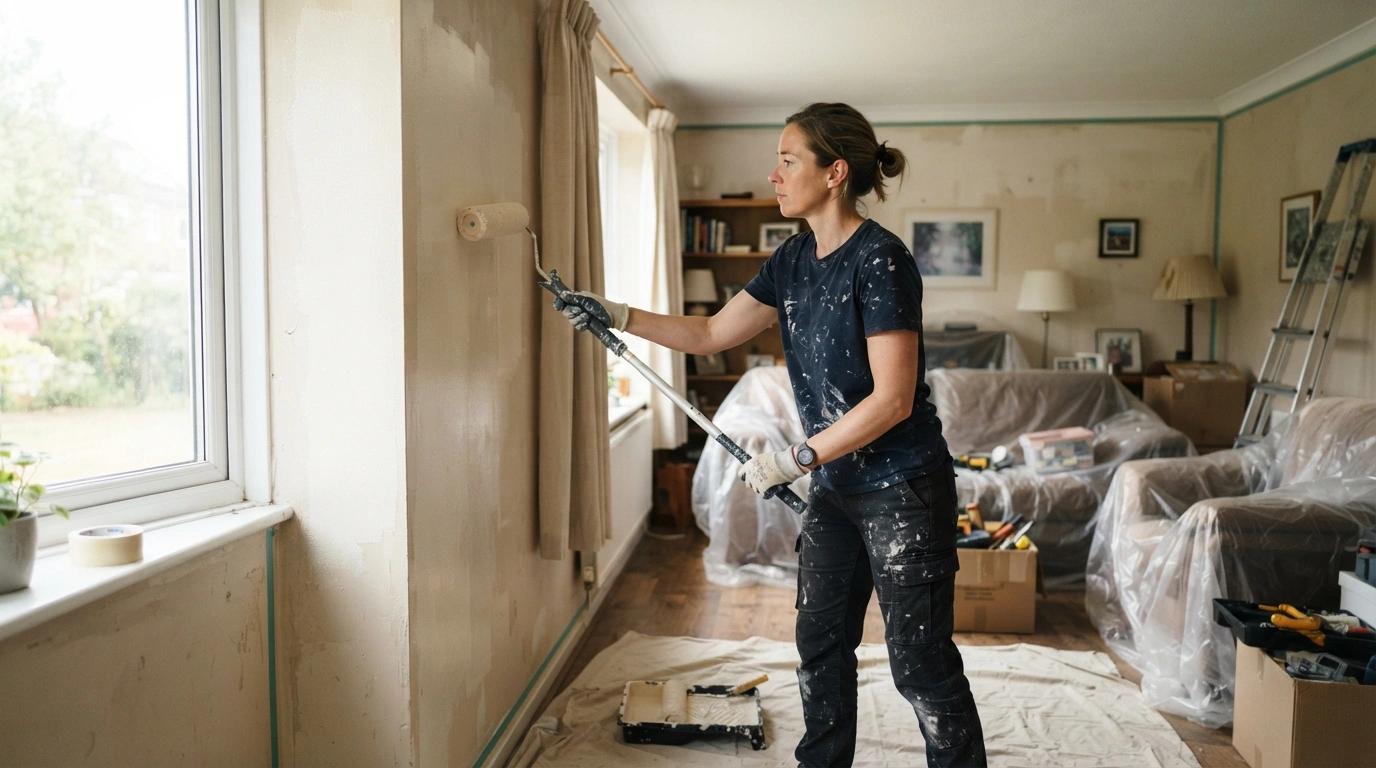
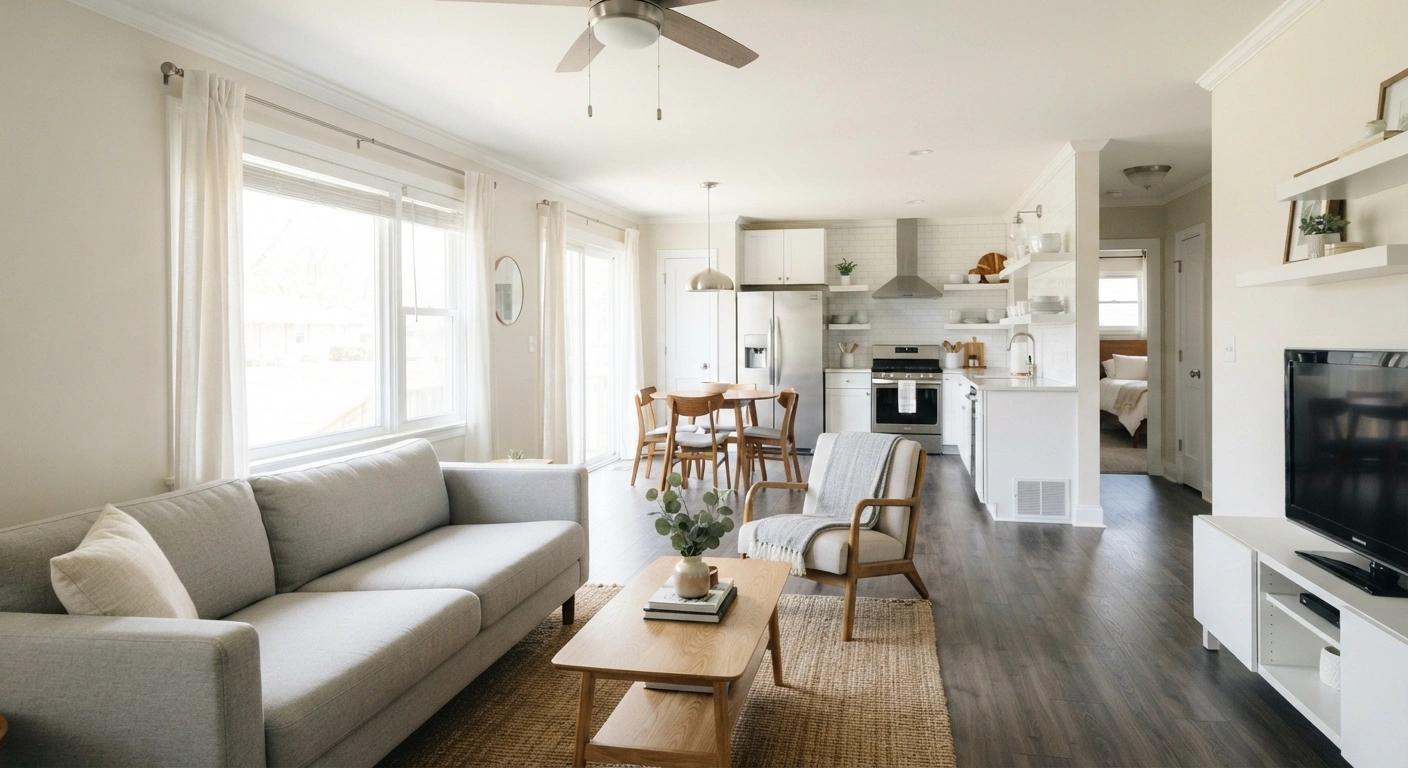
You want to paint your 1000 sq ft interior, and want to know a real number before you call anyone. The honest answer is that the cost to paint a 1,000 sq ft house interior in Overland Park usually runs about $2,000 to $4,500 for the walls alone, and roughly $3,000 to $6,000 once you add ceilings, trim, and doors.
Most homeowners land somewhere in the $3,500 to $4,500 range for a full repaint of a home this size, assuming the walls are in decent shape and there is no major drywall or wallpaper work. This guide will help you understand why it costs this much, why the cost can move up or down, and how to read a quote exactly so you know what exactly you're paying for.
Key Takeaways
A 1,000 sq ft interior repaint usually costs $2,000 to $4,500 for walls only, or about $3,000 to $6,000 for the full package with ceilings, trim, and doors.
Interior painting runs roughly $2 to $6 per square foot of floor space, with walls-only jobs at the low end and full-surface jobs at the high end.
Your paintable surface is far larger than your floor area, which is why a quote always looks bigger than the square footage suggests.
Prep and wall condition move the price more than almost anything else, since patching, sanding, and priming eat labor hours.
Room count and layout matter more than raw size, because more doors, corners, and closets mean more slow cut-in work.
Average cost to paint a 1,000 sq ft house interior
The cost to paint a 1000 sq ft house interior usually falls between $2,000 and $4,500 for walls only, and it can even increase to roughly $3,000 to $6,000 for a full interior which includes ceilings, trim, and doors. The interior work for a square foot room can typically cost from $2 to $6, with walls-only costing less, from $2 to $3.50, while a full overhaul can cost toward $4 to $7. Labor is the biggest piece of any paint job, that's why painter wages move your total the most. Painters earn a national median wage of about $22.94 an hour according to the U.S. Bureau of Labor Statistics, and a home this size takes a two-person crew a few days, so most of what you pay covers skilled hours, not the paint in the cans.
Interior painting cost by square footage
Price increases with increase in the square footage. The table below gives typical interior painting costs by size, covering walls plus light trim, with the per-square-foot figure based on floor area. Treat these as planning ranges, not quotes, since condition and layout swing the final number.
| Home size | Typical interior cost | Per square foot |
|---|---|---|
| 800 sq ft | $1,600 to $4,000 | $2 to $5 |
| 1,000 sq ft | $2,000 to $5,000 | $2 to $5 |
| 1,200 sq ft | $2,400 to $6,000 | $2 to $5 |
| 1,500 sq ft | $3,000 to $7,500 | $2 to $5 |
| 2,000 sq ft | $4,000 to $10,000 | $2 to $5 |
| 2,500 sq ft | $5,000 to $12,500 | $2 to $5 |
The difference of the price inside each row is wide for a reason. For the cost to paint an 800 sq ft house interior, a condo with good walls and one color throughout sits near the bottom, while the same size chopped into small rooms with damaged plaster and three colors sits near the top. The average cost to paint a home interior depends on how much surface there is and how many hours it takes to prep it, not the number on your listing.
Why your paintable area is bigger than your square footage
Here is the part that makes quotes stop looking random. When your house is listed at 1,000 sq ft, that is the floor area, the flat ground the house covers. Painters do not paint the floor. They paint walls, ceilings, trim, and doors, and all of those surfaces together run far larger than the footprint.
As a rough rule, the paintable surface is about 2.5 to 4 times the floor area, so the cost to paint an entire house interior tracks that larger number, and a 1,000 sq ft home has roughly 2,500 to 4,000 sq ft of actual surface to coat.
That cost climbs with taller ceilings, more interior walls, and generous trim, and it stays lower in an open layout with eight-foot ceilings and plain doors. It is also why two homes with the identical listed size get very different numbers, and why a thorough painter walks every room before quoting a full interior repaint rather than pricing off the floor plan. Older Overland Park homes with lots of wood trim and cut-in work carry more hours than a newer open-concept build of the same size.
What's included in the price, and what's not
The price to paint the interior of a house depends on scope more than anything else, meaning which surfaces the number actually covers. A walls-only quote is a much smaller job than walls plus ceilings plus every piece of trim and every door. Ceilings add cutting-in and overhead ladder work, and trim and doors are slow, detailed brushwork that takes far more time per square foot than rolling an open wall. Closets get skipped in a lot of estimates and then surprise people later.
The table below shows roughly how the pieces stack for a home this size.
| Surface | Typical add | Note |
|---|---|---|
| Walls only, all rooms | $2,000 to $3,500 | Standard drywall, minimal repairs |
| Ceilings | $400 to $800 | Often quoted separately from walls |
| Trim and doors | $350 to $800 | Depends on door count and trim detail |
| Closets | $150 to $350 | Frequently left out of first estimates |
| Full interior | $3,000 to $6,000 | Walls, ceilings, and trim together |
When you compare quotes, the first thing to check is whether ceilings, trim, and closets are in the base price or added on. A low number with half the surfaces missing is not actually the cheaper job.
What changes the cost to paint a house interior
Within these ranges, a handful of factors decide whether your project lands at the low or high end.
1. Wall condition and prep
Prep is the biggest swing in the whole estimate. Smooth, sound walls get a quick scuff-sand and go. Walls with nail pops, cracks, old patches, or wallpaper need hours of proper surface prep before a drop of color goes on, and that labor is where the dollars add up. If a wall has soft or water-damaged areas, repairing the damaged wood first is not optional, because paint over a failing surface peels within a season and you pay twice.
2. Ceiling height
Eight-foot ceilings are the baseline. Nine or ten feet adds wall area and usually means more setup, taller ladders, and slower work, which pushes the cost up across the whole job.
3. Number of coats and color changes
A light color going over a similar light color might cover in one coat. Going dark to light, or painting every room a different color, often takes two or three coats and far more cutting-in time, and the labor to do it right climbs with each pass.
4. Paint grade
Better paint costs more per gallon but often covers in fewer coats and holds up longer, so the price difference on a small home is modest. Picking the finish you choose for each room also matters, since flatter sheens hide wall flaws while glossier ones wipe clean in high-traffic spots.
5. Room count and layout
Two homes can share a square footage and still price differently. More bedrooms, bathrooms, closets, and hallways mean more corners, doorways, and careful cutting-in, and that detail work scales with room count rather than floor area.
Why painting quotes for the same house vary so much
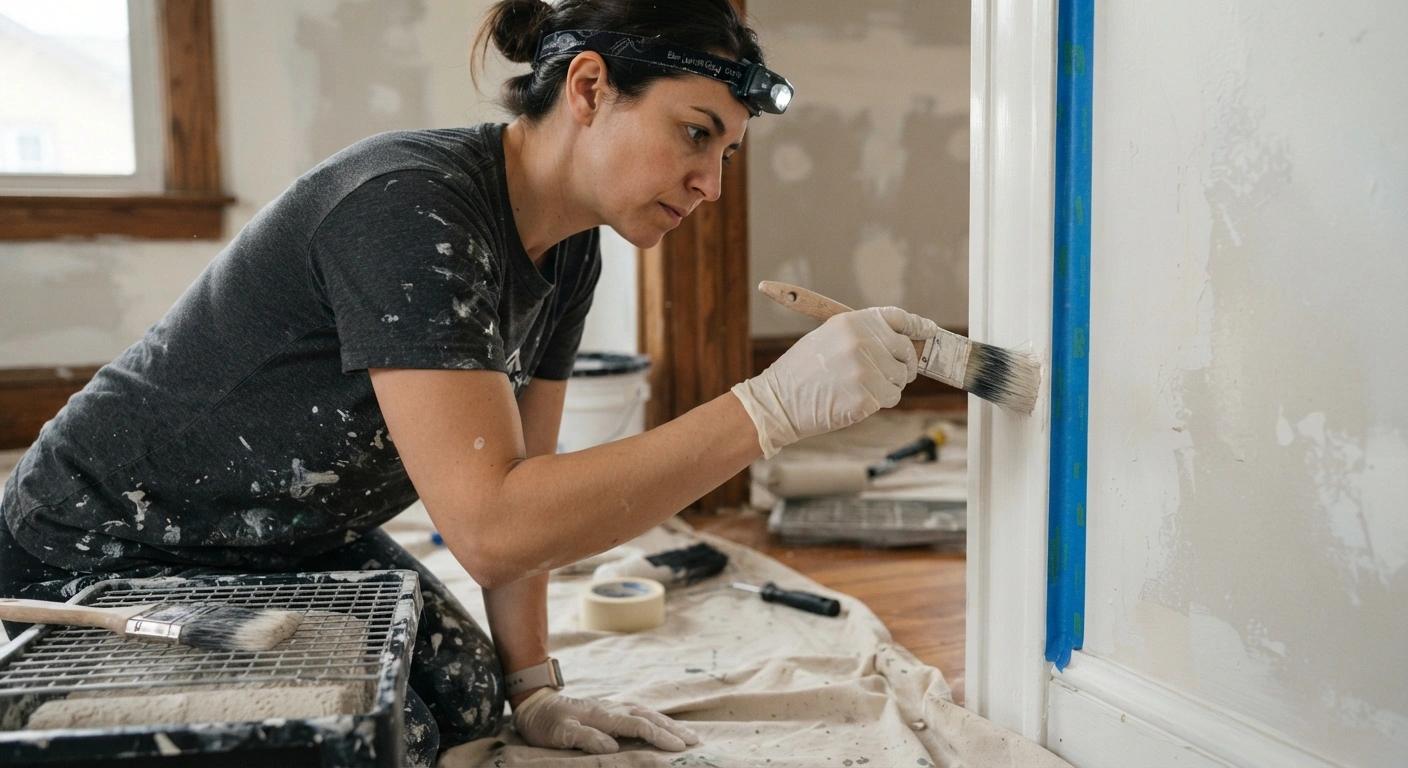
You can hand the same 1,000 sq ft house to two painters and the cost can still vary thousands apart, and it usually is not because one is picking your pockets. It is scope, prep, and what each painter actually wrote down.
A clear written quote protects you because it gives you a cost breakdown. A quote worth trusting should show you the following things:
- 1Every surface being painted, so walls, ceilings, trim, doors, and closets are either in or clearly out.
- 2The prep included, meaning patching, sanding, caulking, and priming, named step by step.
- 3The specific product and sheen going on each surface.
- 4The number of coats.
- 5A fixed price for that defined scope, not a range that drifts once the work starts.
When you can read exactly what you are paying for, you will understand why prices can vary so much quote to quote.
How to lower the cost to paint inside a house
There are honest ways to bring the cost to interior paint a house down without buying yourself a redo.
- 1Book in the off-season. Painters are slower in late fall and winter, so interior work often prices better from November through February.
- 2Clear and prep the space yourself. Moving furniture, taking down pictures, and removing outlet covers saves billable hours.
- 3Trim the scope. Painting walls now and leaving ceilings for later, or skipping low-visibility closets, cuts the total without hurting the rooms you actually see.
- 4Use fewer colors. One neutral through the main living areas means less cutting-in and fewer gallons than a different color in every room.
The one place to never save is prep. Skipping the sanding, patching, and priming to shave a few hundred dollars is how a paint job fails early, and a surface that needs repair only gets worse and more expensive the longer it sits.
Get a written price to paint the interior of your house
Stone Painting built its whole process around removing bill stress for homeowners. Every interior project runs on the same principles.
- 1A same-day fixed written quote that names every surface and prep step before you commit to anything.
- 2A dedicated project manager, Lorenzo Lopez, as your single point of contact from start to finish.
- 3End-of-day text updates so you always know what happened without chasing anyone.
- 4A final walkthrough before the remaining 75 percent of payment, so you approve the finished work first.
- 5An up-to-5-year written workmanship warranty, so if something goes wrong Stone comes back and makes it right.
Stone serves homeowners across Overland Park and the nearby Kansas City metro, and the owner personally walks your rooms before quoting. When you are ready for a real number on your own home, you can Book Your Free Estimate or call (913) 963-6465.
Paint the walls, skip the guesswork
Painting a 1,000 sq ft interior is one of the more approachable projects a homeowner takes on, and the price comes down to a few things you can actually see once you know to look, meaning the surfaces in scope, the condition of the walls, and the hours the prep demands. A home this size usually lands in the low-to-mid four figures for a full repaint, more if the walls need work, less if you keep the scope tight. Read the quote closely, make sure every surface is named, and the number stops being a mystery.
Frequently asked questions
How much does it cost to paint the interior of a 1,000 sq ft house in Overland Park?
Painting a 1,000 sq ft house interior usually costs $2,000 to $4,500 for walls only, or about $3,000 to $6,000 for a full interior with ceilings, trim, and doors. Most homeowners land around $3,500 to $4,500 for a full repaint when the walls are in good shape and no major repairs are needed.
What is the cost to paint an 800 sq ft house interior?
An 800 sq ft interior typically runs $1,600 to $4,000, depending on scope and condition. Walls-only work sits at the low end, while adding ceilings, trim, and heavier prep pushes toward the top of that range.
What is the average cost to paint a home interior per square foot?
Interior painting averages $2 to $6 per square foot of floor space. Walls-only jobs run closer to $2 to $3.50, and the figure climbs to $4 to $7 once ceilings and trim are included, since those surfaces add slow detail work.
How long does it take to paint a 1,000 sq ft interior?
A professional two-person crew usually finishes a full 1,000 sq ft interior in two to four working days, depending on room count, trim detail, and drying time between coats. Heavier prep, like patching or wallpaper removal, adds time on the front end.
Does interior painting include ceilings and trim?
Not always, which is why scope matters. Many base quotes cover walls only and price ceilings, trim, and closets separately. Always confirm which surfaces are in the price before you compare one estimate to another.
Is it cheaper to paint a house interior yourself?
DIY is cheaper on materials, usually a few hundred dollars for a home this size, but it costs you two or three weekends and a finish that depends on your own skill. Hiring a pro costs more in labor but delivers a faster, cleaner result with the prep handled correctly.