
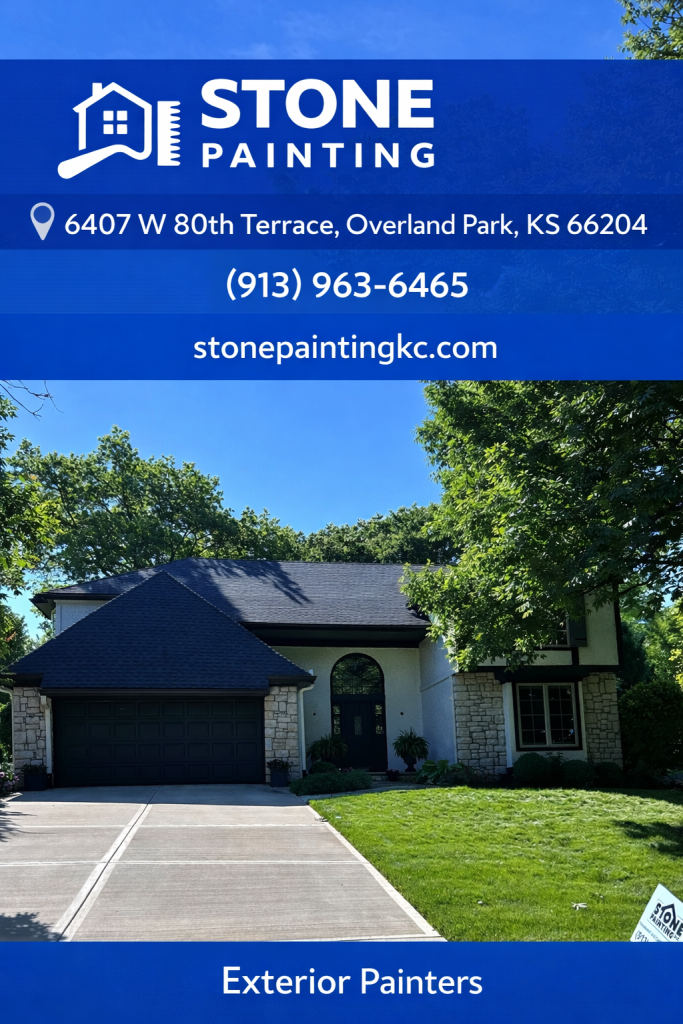
Painting the exterior of your 2000 square foot home in Overland Park is one of the most impactful investments you can make in your property. Not only does a fresh coat of paint dramatically improve curb appeal, but it also provides essential protection against the challenging weather conditions we experience here in the Kansas City metro area. If you’re planning this project, you’re probably wondering what kind of budget you need to set aside. For most 2000 square foot homes in Overland Park, professional exterior painting typically costs between $5,500 and $8,500, with the average project landing around $6,800 to $7,200.
At Stone Painting, we’ve painted countless homes in this size range throughout Overland Park, and we’ve learned that while square footage gives us a starting point for estimating, the actual cost of your specific project depends on a variety of factors that are unique to your home. Understanding these variables will help you set realistic expectations and make informed decisions about your exterior painting project. Let’s explore everything that goes into pricing an exterior paint job for a 2000 square foot home in our area.
Why Square Footage Alone Doesn’t Tell the Whole Story
When homeowners call us asking for a quote based solely on their home’s square footage, we always explain that the interior square footage is just one piece of the pricing puzzle. A 2000 square foot ranch-style home will have a very different exterior painting cost than a 2000 square foot two-story colonial, even though they have identical interior living space.
The configuration of your home makes a substantial difference in pricing. A single-story ranch spreads its 2000 square feet across a larger footprint, which means more exterior wall surface area to paint. However, the work can be completed more quickly because painters can work from the ground or short ladders without extensive scaffolding or specialized equipment. Conversely, a two-story home with 1000 square feet per floor has less total wall surface area but requires additional setup time, taller ladders or scaffolding, and more safety precautions that slow down the work. The labor costs for reaching those upper areas safely add to the overall project expense.
Split-level homes, which are quite common in many Overland Park neighborhoods, present their own unique challenges. These homes typically have multiple levels at different heights, creating varied elevation changes that require different ladder configurations and more frequent repositioning of equipment. The complexity of working around these level changes can add 10-15% to the labor costs compared to a simple ranch or straightforward two-story design.
Your home’s architectural style also dramatically impacts the amount of paintable surface area. A contemporary home with clean lines and minimal trim might have relatively few linear feet of trim to paint, while a craftsman-style bungalow or a traditional colonial with detailed window surrounds, decorative brackets, multiple gables, and extensive fascia boards could have two or three times as much trim work. Since trim painting requires careful brush work and takes significantly longer than rolling large wall surfaces, homes with elaborate trim details will cost more to paint even if the basic wall area is the same.
Understanding the Cost Components for Your 2000 Square Foot Home
The price you’ll pay for painting your 2000 square foot home’s exterior breaks down into several major components, each of which contributes to the total investment. Understanding these components helps you appreciate where your money is going and why quality painting isn’t just about slapping color on walls.
Surface preparation represents the largest portion of labor costs on most exterior painting projects, typically accounting for 60-70% of the total work time. For a 2000 square foot home in good condition, preparation might include power washing the entire exterior to remove dirt, mildew, pollen, and loose paint, scraping any areas where paint is peeling or flaking, sanding rough spots to create a smooth surface for new paint, and caulking gaps around windows, doors, and trim to seal out moisture. If your home hasn’t been painted in many years or if there’s significant paint failure, the preparation time increases substantially, which drives up costs.
We frequently work on homes in established Overland Park neighborhoods where the exterior hasn’t been painted in 15 or 20 years. These homes often require extensive scraping to remove multiple layers of failing paint, primer application on bare wood where paint has been completely removed, and wood repair or replacement in areas where moisture damage has occurred. This additional preparation work can add $1,000 to $2,500 to the base cost of painting, but it’s absolutely necessary for a paint job that will last. Skipping these steps would be like building a house on a weak foundation—the results might look acceptable initially, but failure is inevitable and will come much sooner than it should.
Paint material costs for a 2000 square foot home typically range from $800 to $1,500, depending on the quality of paint you select and how much surface area needs to be covered. At Stone Painting, we primarily use Sherwin-Williams Duration and Emerald lines or Benjamin Moore Aura and Regal Select for exterior projects. These premium paints cost more than economy options—sometimes 50-70% more per gallon—but they contain higher pigment concentrations, superior binders, and better UV protection that extends the life of your paint job significantly. In Overland Park’s climate, where we deal with intense summer sun, heavy humidity, severe thunderstorms, and freezing winter temperatures, paint quality makes the difference between a paint job that lasts eight to ten years versus one that starts failing in four or five.
Labor costs represent the other major component, and for a 2000 square foot home, you’re typically looking at anywhere from three to seven full days of work depending on the complexity. A straightforward ranch with simple trim might be completed by a crew of two or three painters in three to four days, while a two-story home with complex architectural details could take a full week or more. Professional painting companies charge labor rates that reflect not just the painters’ time but also the overhead costs of running a legitimate business—insurance, worker’s compensation, licensing, quality tools and equipment, and ongoing training. These costs ensure you’re working with skilled professionals who will complete your project safely and to the highest standards.
Price Ranges Based on Home Configuration and Condition
To give you a clearer picture of what you might expect to pay, let’s break down pricing for different scenarios involving 2000 square foot homes in Overland Park.
For a simple ranch-style home in good condition with minimal trim and siding that’s been well-maintained, you might expect costs on the lower end of the range, typically $5,500 to $6,500. These homes have fewer complications—the painters can work efficiently from the ground or short ladders, there’s less linear footage of trim requiring detailed brush work, and if the existing paint is in decent shape with minimal peeling, the preparation work is relatively straightforward. We see many of these homes in neighborhoods developed in the 1960s and 1970s where homeowners have kept up with regular maintenance and are simply refreshing their home’s appearance with a new color or updating faded paint.
A typical two-story colonial or traditional-style home with standard trim and architectural details usually falls in the middle range of $6,500 to $7,500. These homes require additional equipment to reach the upper story safely, have more trim around windows and doors, and often feature details like shutters, decorative gable vents, or fascia boards that add to the painting time. The extra height also means more care must be taken with safety equipment and weather conditions—high winds or rain are more problematic when working at elevation, which can extend the project timeline if weather delays occur.
Homes with complex architectural features, extensive trim work, or significant repair needs can easily reach $7,500 to $8,500 or higher. We’ve worked on beautiful homes in neighborhoods like Brookridge and Nottingham Estates where the architectural character is exceptional but requires additional labor investment. These might include homes with cedar shake siding that requires more careful preparation, multiple gables with decorative trim, detailed window surrounds with rosettes and corner blocks, or covered porches with columns and railings that need individual attention. Similarly, if your 2000 square foot home has deferred maintenance issues—rotted wood that needs replacement, extensive caulking failures, or widespread paint peeling—the additional preparation and repair work pushes costs toward the higher end of the range.
Stone accents or brick facing can also affect pricing. Many Overland Park homes feature stone or brick on portions of the exterior, which obviously don’t need painting. However, these features often mean additional cutting-in work around the masonry, and if your home has a combination of materials, the project becomes more complex as painters work around different surfaces and textures. On the positive side, less paintable surface area can reduce material costs somewhat, though the labor savings are often minimal because of the additional detail work required.
What Quality Surface Preparation Looks Like
Since preparation is such a critical component of exterior painting and represents the majority of labor time, it’s worth understanding exactly what this work entails and why it matters so much for the longevity of your paint job.
The process begins with thorough power washing of your entire home’s exterior. This isn’t just a quick spray-down—professional power washing removes years of accumulated dirt, pollen, mildew, and environmental pollutants that prevent new paint from adhering properly. In Overland Park, we see significant mildew growth on north-facing walls and in shaded areas that don’t receive direct sunlight. This biological growth must be completely removed and treated before painting, or it will continue growing underneath your new paint and cause premature failure. Proper power washing for a 2000 square foot home typically takes four to six hours and uses specialized cleaners in addition to high-pressure water.
After the surfaces dry completely—which can take 24 to 48 hours depending on weather conditions and humidity levels—the scraping process begins. Every area of peeling or loose paint must be removed down to a solid substrate. This is tedious, physically demanding work that can’t be rushed. Painters use various tools including carbide scrapers, wire brushes, and specialized peeling tools to remove failing paint while being careful not to damage the underlying wood or siding material. On a well-maintained home, scraping might only take a few hours, but on homes with widespread paint failure, it can consume two or three full days of labor.
Sanding follows scraping to feather the edges where old paint meets bare wood, creating a smooth transition that won’t be visible under the new paint. This step is often overlooked by less experienced or less conscientious painters, but it makes a dramatic difference in the final appearance. Without proper sanding, you’ll see ridges and lines where paint layers overlap, creating a visibly uneven surface that detracts from your home’s appearance.
Caulking is another critical preparation step that protects your home from moisture intrusion. Every gap around windows, doors, corner boards, and trim pieces needs fresh, flexible caulk that will move with your home’s natural expansion and contraction through seasonal temperature changes. We use premium acrylic latex caulks that remain flexible for years and can be painted immediately. Older caulk that’s cracked or separated must be completely removed before new caulk is applied—simply putting new caulk over old is a shortcut that leads to failure. For a 2000 square foot home, proper caulking might require 15 to 25 tubes of caulk and takes six to eight hours of detailed work.
Priming bare wood is essential anywhere paint has been scraped away or where new wood has been installed to replace rotted sections. Primer seals the wood, prevents tannin bleed-through that can discolor your topcoat, and provides a uniform surface for your finish paint. Quality exterior primers like Sherwin-Williams Extreme Bond or Benjamin Moore Fresh Start are formulated to penetrate wood fibers and create superior adhesion for the topcoat. Skipping primer or using cheap primer is a false economy that will haunt you within a couple of years when paint begins peeling in those areas.
The Importance of Paint Quality in Kansas Weather
Overland Park’s climate presents specific challenges that make paint quality particularly important. We experience significant temperature swings throughout the year, from summer days that can exceed 100 degrees with high humidity to winter nights that plunge well below zero. These extreme temperature fluctuations cause your home’s siding and trim to expand and contract repeatedly, which puts stress on paint films.
Premium paints formulate their products with more flexible resins that can accommodate this movement without cracking or peeling. The binders in quality paints—essentially the glue that holds pigment to your home’s surface—are more durable and maintain their flexibility over many years. Cheaper paints use less expensive binders that become brittle more quickly, especially under UV exposure and temperature stress. When paint becomes brittle, it cracks and peels, allowing moisture to penetrate behind the paint film where it causes wood rot and further paint failure.
UV protection is another critical factor in our sunny climate. Overland Park receives substantial sunshine throughout the year, and UV radiation is extremely damaging to paint. It breaks down the chemical bonds in paint, causing color fading and chalking—that powdery residue you feel when you run your hand across old, faded paint. Premium paints incorporate UV inhibitors and stabilizers that protect against this degradation. While economy paints might show noticeable fading and chalking within three to four years, quality paints maintain their color and integrity for eight to ten years or longer.
Moisture resistance is equally important given our humid summers and the snow and ice we experience in winter. When moisture penetrates paint, it causes the paint to lose adhesion to the substrate, leading to blistering and peeling. Quality exterior paints are formulated to be breathable—they allow water vapor to escape from behind the paint film while preventing liquid water from penetrating through. This breathability is especially important on wood siding, which naturally absorbs and releases moisture with seasonal humidity changes.
The cost difference between premium and economy paint for a 2000 square foot home might be $300 to $500, but that investment can extend your paint job’s lifespan by three to five years. When you factor in the cost and inconvenience of repainting your home more frequently, premium paint is unquestionably the better value. At Stone Painting, we’ve repainted too many homes where the previous contractor used cheap paint and the homeowner had to repaint in just five or six years. That savings of a few hundred dollars on paint ended up costing thousands in premature repainting.
Additional Costs and Considerations
Beyond the base cost of painting your 2000 square foot home, several additional factors might affect your final investment. Wood repair is one of the most common add-ons we encounter. Even well-maintained homes can develop wood rot, especially around areas with repeated moisture exposure like window sills, door thresholds, fascia boards, and lower siding courses where water splashes back from the ground or accumulates from roof runoff.
Minor wood repairs—replacing a few trim boards or a couple of siding pieces—might add $300 to $600 to your project. More extensive rot affecting multiple areas of your home could add $1,000 to $2,000 or more. While these costs can be surprising, addressing wood rot before painting is absolutely essential. Painting over rotted wood doesn’t fix the problem; it simply hides it temporarily while the rot continues spreading underneath your new paint. Within a year or two, the paint will fail in those areas, and you’ll have wasted money painting surfaces that weren’t sound.
If your home has shutters, they add another dimension to the project. Shutters can be painted while installed on the house, but the results are never as clean and professional as removing them, painting all surfaces thoroughly, and reinstalling them after the paint has cured. Removing and reinstalling shutters is time-consuming, so expect to add $15 to $30 per shutter to your project cost. For a typical 2000 square foot home with 12 to 16 shutters, this might add $250 to $450 to the total, but the finished appearance is dramatically better.
Color changes can also affect pricing, though usually only modestly. If you’re painting your home a similar or darker color than the existing paint, two coats typically provide complete coverage. However, if you’re making a dramatic change—painting a dark color over light, or especially painting a light color over dark—you might need an additional coat or tinted primer to achieve uniform coverage. This could add one extra gallon of paint per color and perhaps an additional half-day of labor, increasing costs by $200 to $400.
The time of year you schedule your project can influence both availability and pricing. Spring and fall are peak seasons for exterior painting in Overland Park because the weather conditions are ideal—moderate temperatures, lower humidity, and less likelihood of weather delays. During these busy seasons, established painting contractors often have full schedules, and you may need to book several weeks or even months in advance. Summer can also work well for painting, though we have to work around extremely hot days and afternoon thunderstorms. Mild winter days are suitable for painting as well, and scheduling your project during the off-season might provide more flexibility and potentially more competitive pricing.
What to Expect During the Painting Process
Understanding the painting process helps you know what to expect when your 2000 square foot home is being painted. The entire project typically takes four to seven days from start to finish, depending on the complexity and weather conditions.
Day one usually focuses on setup and initial preparation. Painters will protect your landscaping, walkways, and any areas adjacent to the house with drop cloths and plastic sheeting. They’ll move outdoor furniture, planters, and decorations away from the house to provide clear access to all surfaces. Power washing typically begins on day one and might extend into day two depending on the extent of cleaning needed and drying time required.
Days two and three are typically devoted to scraping, sanding, caulking, and making any necessary repairs. This is when you’ll see the most activity around your home as painters work their way around the exterior addressing every surface that will receive paint. Wood repairs, if needed, usually happen during this phase. Any bare wood exposed during preparation will receive primer, which needs to dry completely before topcoat application can begin.
Days three through five focus on paint application. Professional painters typically start from the top of the house and work their way down, painting siding, trim, soffit, and fascia in a systematic pattern. Most homes receive two coats of paint, with the second coat applied after the first coat has dried sufficiently—usually 24 hours depending on temperature and humidity conditions. Trim work often happens as a separate phase because it requires different techniques and tools than painting large wall surfaces.
The final day includes detail work like painting any areas that were difficult to reach during the main painting phase, touching up any spots that need additional coverage, and thorough cleanup. Professional painters will walk the property with you to ensure you’re completely satisfied with the results before considering the job complete.
Weather can affect this timeline significantly. Rain delays work, and painting shouldn’t be done when rain is imminent because moisture prevents proper paint adhesion and curing. Extreme heat above 95 degrees can also be problematic because paint dries too quickly, preventing proper leveling and potentially causing lap marks. Wind can blow dust and debris onto wet paint, creating a rough surface. Professional painting companies monitor weather forecasts carefully and adjust schedules as needed to ensure optimal conditions for your paint job.
Making the Investment Worthwhile
Painting the exterior of your 2000 square foot home is a significant investment, but it’s one that pays dividends in multiple ways. The most obvious benefit is improved curb appeal—a fresh, professionally painted exterior makes your home look well-maintained and attractive, enhancing your enjoyment of your property and potentially increasing its market value if you decide to sell.
Beyond aesthetics, exterior paint serves as your home’s primary defense against weather and environmental damage. It protects your siding and trim from moisture penetration, UV damage, and temperature extremes that can cause wood to deteriorate. A quality paint job acts like a shield, extending the life of your home’s exterior materials and preventing costly repairs down the road. This protective function is why choosing quality paint and proper application techniques matters so much—it’s not just about appearance but about preserving your investment in your home.
To maximize the value of your investment, work with a painting contractor who takes pride in their craftsmanship and uses quality materials. At Stone Painting, we believe in doing things right the first time, which means thorough preparation, premium paints, and skilled application techniques that result in a beautiful, durable finish. We stand behind our work with comprehensive warranties because we’re confident in the quality of what we do.
Before signing a contract, make sure you understand exactly what’s included in your estimate. It should detail the preparation work, number of paint coats, paint brand and product line, areas to be painted, and any warranty offered. Don’t hesitate to ask questions about anything that’s unclear. A reputable contractor will welcome your questions and take the time to ensure you understand every aspect of your project.
When you’re ready to transform your 2000 square foot home with professional exterior painting, Stone Painting Exterior Painting in Overland Park is here to provide expert guidance and exceptional results. We’ll assess your home’s specific needs, discuss your color preferences and goals, and provide a detailed estimate that clearly outlines what you can expect. With our commitment to quality workmanship and customer satisfaction, we’ll help you protect and beautify your Overland Park home for years to come.